

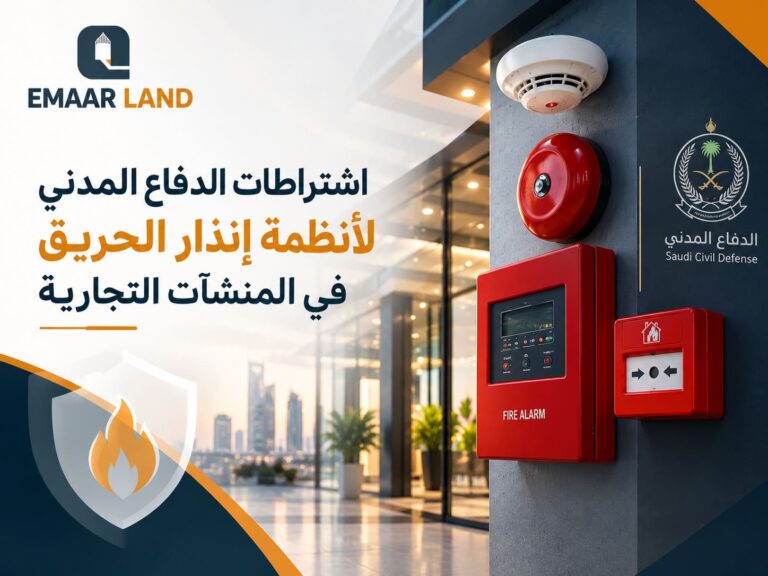
A small fire inside a store or warehouse can turn into a threat to lives and property within minutes, especially if it is detected late or there is no suitable alarm system. Therefore, complying with Civil Defense requirements for fire alarm systems in commercial facilities is not merely a step to obtain a license; it is an essential step to detect danger early, organize evacuation, and reduce losses before the situation worsens.
What are the Civil Defense requirements for fire alarm systems in commercial facilities?
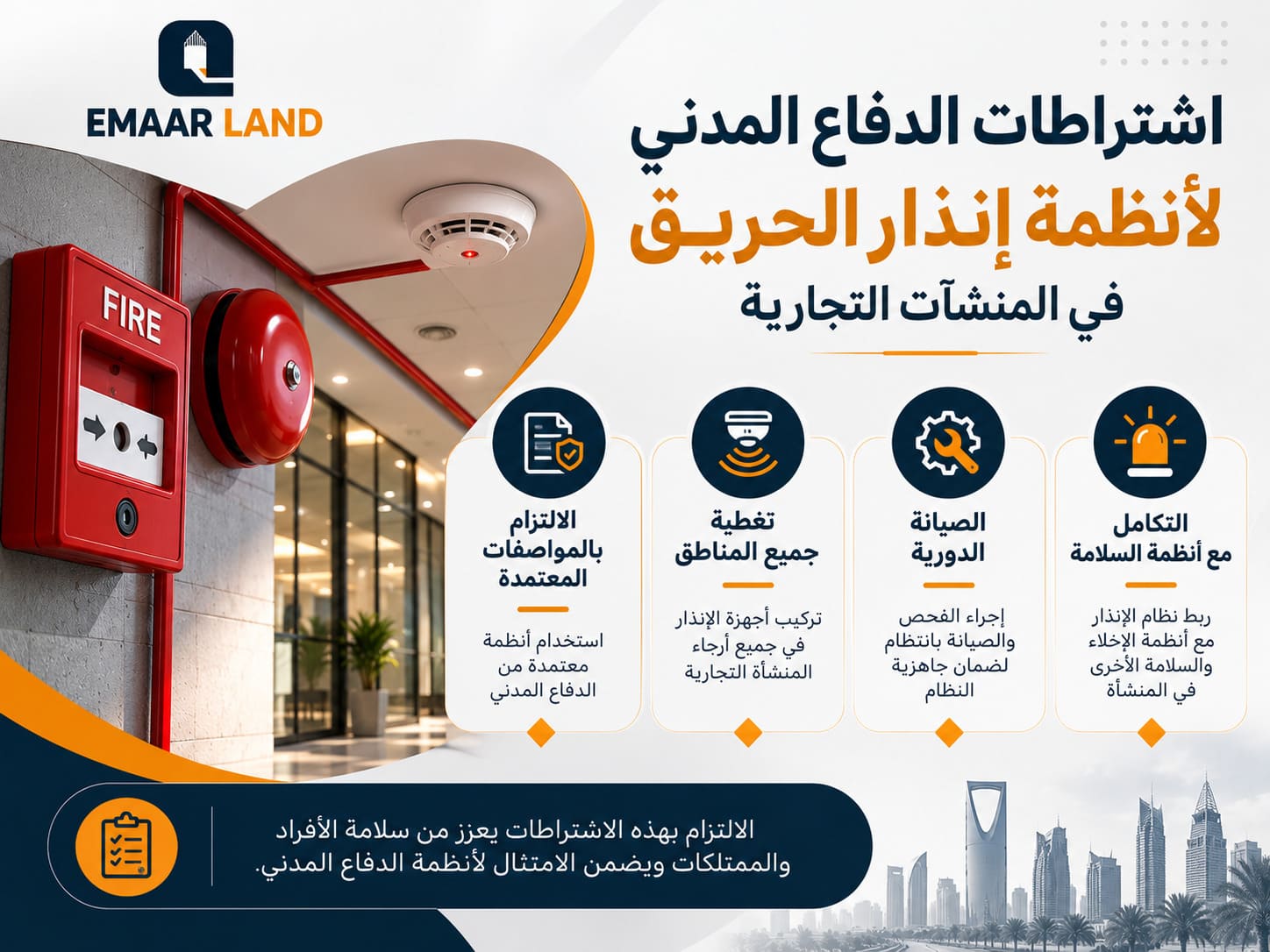
The Civil Defense requirements for fire alarm systems in commercial facilities consist of a set of regulatory and technical requirements aimed at detecting fire in its early stages, alerting occupants, and supporting a rapid emergency response. Details vary depending on the building's area, the nature of the activity, the number of people, the type of materials stored inside, and the level of fire risk.
In Saudi Arabia, owners of commercial facilities should refer to the requirements of the General Directorate of Civil Defense and the relevant authorities, and verify the application of the Saudi Building Code, the Saudi Fire Code, and the technical standards approved according to the facility's condition. Installing an alarm device at random is not sufficient; the protection system must suit the building and be designed according to the requirements applicable to it.
The requirements that should typically be verified include:
- Providing a fire alarm system suitable for the facility's classification and use.
- Distributing fire detectors and alarm devices according to the approved design.
- Ensuring that sound or appropriate alerting means reach occupied areas.
- Integrating the system with other protection systems when regulations require it.
- Providing a backup power source according to applicable technical requirements.
- Carrying out periodic testing and maintenance and keeping their records.
- Ensuring emergency exits and evacuation routes are clear and not obstructed.
- Training staff to respond to alarms and follow evacuation procedures.
Most important point: there is no single list that suits all types of commercial facilities. A small shop, a restaurant, or a warehouse holding flammable materials may each require a different design, depending on the requirements applicable to its activity and building.
What are the key Civil Defense requirements for fire alarm systems that must be met?
To understand the key requirements, the alarm system must be viewed as part of an integrated safety system, not as a standalone device mounted on the wall. The process begins by identifying potential hazards, then selecting the appropriate equipment, distributing it correctly, testing it, and ensuring it is ready to operate when needed.
1. Selecting the Right Alarm System for the Nature of the Activity
The system type must be determined based on the building's use and characteristics. Your commercial building may need a conventional system suitable for some small facilities, while larger or more complex buildings require an addressable system that helps pinpoint the alarm location more precisely.
The selection must take into account the area of the space, its internal layout, ceiling height, ventilation, the nature of the goods, and the environment in which the devices will be used. The design must also comply with approved standards and the requirements of the relevant authority.
2. Distributing Fire Detectors in Suitable Locations
Detector distribution does not depend on area alone, but also on the detector type and site conditions. A smoke detector may be suitable in a certain area, while a heat detector may be more appropriate in an environment where vapors or particles are naturally generated, such as some kitchen areas.
Obstructions, high ceilings, and air currents must also be considered, along with adherence to the spacing distances specified by approved technical standards. Poorly planned distribution may delay fire detection or cause unnecessary repeated alarms.
3. Providing Audible or Visual Alarm Means When Needed
The alarm signal must reach the people in the areas covered by the system. The type, locations, and placement of notification devices are determined according to the nature of the facility, noise levels, and accessibility and safety requirements.
In quiet areas, an audible alert may be sufficient according to the approved design, while some environments may require additional visual means or other solutions to ensure the warning reaches everyone present.
4. Ensuring Continuous Operation
The system must be designed to ensure the availability of the power needed for operation, including a backup power source when required by the specifications. Faults that may affect the system's ability to detect fire or transmit signals must also be addressed.
The control panel, communication circuits, power supplies, and detection and notification devices are interconnected components; therefore, they should be tested as a complete system, not by inspecting a single device only.
5. Commitment to Testing and Maintenance
The facility's responsibility does not end after installation. A maintenance plan and periodic testing must be established in accordance with the manufacturer's instructions and approved technical requirements, with results, faults, and corrective actions documented.
This step helps detect issues before they affect system performance and supports proof of fire system readiness during required inspections.
How do fire system requirements vary by type of commercial facility?
Protection requirements vary by activity, and building area alone cannot be relied upon to determine the required level of protection. Civil Defense regulations specify that there are requirements linked to specific types of activities and buildings, including retail shops, warehouses, and hotels.
Retail Shops and Showrooms
Retail stores need an alarm system that suits the layout of the premises and the nature of the goods on display. A shop selling electronic devices differs from a store holding large quantities of paper, fabric, or products that ignite easily.
The arrangement of shelves and decorations must be considered, detectors and alarm devices must not be obstructed, and the aisles leading to exits must be kept clear. Staff should also know how to use manual alarm devices and the procedures to follow when the alarm sounds.
Warehouses and Storage Centers
Warehouses require special attention due to tall shelving, stacked goods, and the possibility of storing various materials in one space. The storage method, the height of goods, and the gaps between shelves can affect how quickly fire is detected and how smoke spreads.
Before selecting a protection system, you must know the type of products, how they are stored, and whether they include flammable materials or materials that react dangerously when exposed to heat. The nature of the activity may require additional extinguishing systems or special arrangements to separate fire zones.
Restaurants and Commercial Kitchens
Restaurant risks differ from retail store risks; sources of danger include cooking equipment, electrical connections, accumulated grease, and food preparation areas.
Appropriate detectors must be selected for the surrounding environment, because cooking vapors may cause unwanted alarms if unsuitable devices are used. Likewise, the need for dedicated extinguishing systems for cooking equipment should be assessed according to approved requirements, while keeping evacuation exits open and carrying out necessary maintenance.
Hotels, Hospitals and Multi-Use Buildings
Hotels and hospitals require extra care due to the large number of rooms and corridors, and the possibility of people who do not know the building's exits or who need help during evacuation.
The alarm system design must take into account zoning, notification methods, emergency plans, and the needs of people with disabilities. In hospitals, response procedures must match the nature of care provided, so that evacuation or patient transfer plans are carried out according to approved safety procedures.
Important note: Hospital or hotel requirements do not automatically apply to stores and warehouses. Reference must be made to the correct building classification and the requirements associated with it.
How does the type of goods and materials present affect the level of fire protection?
A common mistake is choosing an alarm system based only on the name of the business activity. Two stores may sell the same products, yet their fire risks differ due to storage methods, material quantities, ventilation, and heat sources.
Fire risk assessment helps identify ignition sources, materials that may increase the spread of fire, people at risk, and the adequacy of existing alarm and extinguishing systems.
Factors that should be studied include:
- Type of goods: such as fabrics, paper, furniture, and electrical devices.
- Flammable materials: their degree of danger and how they should be handled and stored.
- Heat Sources: such as furnaces, industrial equipment, and electrical panels.
- Space Layout: including shelves, storage rooms, and enclosed rooms.
- Number of Occupants: employees, customers, and visitors.
- Operating Nature: such as continuous operation or the facility being unattended for long hours.
Additional requirements may apply when the facility handles hazardous materials or activities that require special precautions. If the materials are subject to other regulatory jurisdictions, coordination with the relevant authorities may be required, including the Ministry of Environment, Water and Agriculture where the nature of the material or activity falls within its scope.
What is the difference between a fire alarm system and a fire suppression system?
Although both systems share a single goal, each serves a different function. Confusing the two may lead to the belief that having fire extinguishers or a water network is enough to dispense with an alarm system, which is an incorrect assumption where alarm systems are required.
| Item | Fire Alarm System | Fire Suppression System |
| Primary Function | Detecting a fire and alerting to it | Controlling or extinguishing the fire |
| Components | Detectors, control panel, alarm devices, manual call points | Extinguishers, water networks, or specialized suppression systems depending on the design |
| Response Time | Upon detecting fire indicators | When the extinguishing means is operated or activated as per the design |
| Objective | Accelerating response and evacuation | Limiting the spread of fire and reducing its damage |
In some facilities, the two systems may integrate automatically, such as sending a signal to other systems or activating specific functions upon fire detection, if required by the approved design.
System integration must not disable any essential safety function. Each function linked to the system should also be tested in accordance with approved technical procedures.
How do you obtain a safety license and avoid licensing delays?
Fulfilling safety requirements can become an administrative obstacle when the facility owner starts the procedures without knowing the required documents, or discovers a discrepancy between the executed design and the approved drawings.
To minimize the likelihood of delays, it is best to begin by reviewing the requirements specific to the activity and location, then complete the design, implementation and testing in accordance with the applicable official procedures.
Steps to Obtain the License
- Determine the Activity and Building Classification: Identify the nature of the commercial activity, the facility's area and its uses, and verify the regulations that apply to it.
- Review Technical Requirements: Refer to the requirements of the Civil Defense and the Saudi Fire Protection Code, and determine the alarm and fire suppression systems required.
- Prepare the Drawings: Engage a qualified engineering or technical entity according to the project requirements, clearly showing the locations of detectors, the control panel, alarm devices and evacuation routes.
- Implement the Approved Works: Ensure that the equipment and installation conform to the approved drawings and specifications, and that no unreviewed changes are made to the design.
- System Testing: Test detection and alarm devices, backup power and related functions, and keep test results and technical records.
- Submit the Application and Complete Observations: Follow the official channels designated for the activity, and complete the documents or corrective actions requested by the competent authority.
- Maintaining Compliance: After the license is issued, continue maintenance, inspection and training. Obtaining the license does not mark the end of safety responsibility.
The Civil Defense Safety Portal can be used to verify available services and requirements, and to review relevant approved engineering offices and technical service providers.
What Documents Should Be Prepared?
The required documents vary depending on the type of facility and the service provided, but it is useful to prepare an organized file that includes, where applicable:
- Facility data, activity name and building location.
- Engineering drawings and fire prevention and protection plans.
- Data and specifications of fire alarm and fire suppression systems.
- Required test, inspection and compliance reports.
- Maintenance records and repair work.
- Emergency and evacuation plan and proof of staff training, where required.
This list should not be considered a substitute for the official list of documents. The competent authority may request other documents or additional procedures depending on the facility's classification.
What Role Does the Saudi Fire Code Play in Determining Requirements?
The Saudi Building Code for Fire Protection (SBC 801) is a key reference for understanding the requirements for preventing and protecting against fire and explosion hazards in buildings and facilities. Its scope includes design and safety requirements, handling of hazardous materials, inspection, fire fighting systems, and emergency and evacuation plans.
However, applying the code does not mean that every facility needs the same equipment or the same number of detectors. Requirements depend on the occupancy classification, building characteristics, nature of the hazards, and the technical provisions applicable to the project.
How Do You Use the Code When Preparing Your Facility?
Start by determining the occupancy type and actual use of each space, then review the requirements related to detection and alarm, firefighting and emergency exits. If the building is existing and you plan to change its activity or carry out an extension, verify the impact of this change on safety requirements.
Also, review the approved edition of the relevant code and regulations, and avoid relying on clause numbers taken from old guides or unofficial publications. Requirements may vary according to building type and project status, and some requirements may be tied to specific reference technical standards.
How do you choose a fire alarm system at the lowest possible cost?
Choosing a protection system at the lowest possible cost does not mean buying the cheapest equipment or reducing the number of detectors without study. The goal is to avoid unnecessary spending while maintaining all mandatory requirements and the required level of safety.
The following steps help you make an informed decision:
- Determine the actual need: Start by assessing the risks, the building area and its layout, rather than selecting a system before knowing the site requirements.
- Review the design before implementation: Accurate drawings help detect clashes and avoid re-routing cables or relocating devices after installation.
- Select compatible equipment: Verify that devices meet the required specifications and that their components are compatible with the control panel and the system in use.
- Consider future maintenance: Choose solutions that allow organized inspection and repair, with spare parts availability and appropriate technical support.
- Avoid unplanned expansion: Do not add devices or features the design does not need, but also do not remove any component required by the regulations.
- Keep records: Documenting tests, maintenance and modifications helps detect faults and reduce repeated repair work.
In this way, the decision is based on safety requirements and operating cost over the system's lifetime, not on initial cost alone.
Periodic Maintenance of Fire Alarm Systems: What Should Be Inspected?
An alarm system may be installed correctly, yet fail to perform at the required level due to dust accumulation, damage to a component, or loss of communication between devices and the control panel. For this reason, periodic maintenance is essential to keeping the facility ready.
Inspection and testing schedules are determined by the applicable code, the manufacturer's instructions, the nature of the facility, and any requirements imposed by the competent authority.
Basic Inspection Checklist
- Fire Detectors: Check their condition and cleanliness, and perform the appropriate tests to confirm their response.
- Control Panel: Review fault and alarm indicators, the status of communication circuits, and event logs.
- Alarm Devices: Verify that audible and visual alerting devices operate when required, in accordance with the approved test plan.
- Backup Power Supply: Inspect batteries, power sources, and connections in accordance with the manufacturer's instructions.
- Records and Documentation: Record inspection results, faults, repairs, and the dates of the next tests.
Tests must be carried out by qualified personnel, with the necessary precautions taken to avoid triggering an unintended alarm or disabling protection without supervision. Any temporary shutdown of the system must follow approved safety procedures, and service must be restored and its readiness verified once the work is complete.
Common Mistakes That May Lead to Civil Defense Violations
Violations can result from overlooking details that seem minor but directly affect a facility's ability to detect and respond to fire.
The most prominent mistakes include:
- Installing detectors that are unsuitable for the surrounding environment.
- Changing building layouts without reviewing their effect on the alarm design.
- Placing goods or decorations that block detectors or alarm devices.
- Neglecting faults displayed on the control panel.
- Failure to keep required maintenance and testing records.
- Blocking emergency exits or using corridors for storage.
- Relying on fire extinguishers instead of meeting alarm requirements.
- Failing to train staff on evacuation procedures.
- Carrying out installation or maintenance work without confirming that the required qualification and accreditation requirements are met.
Avoiding these mistakes not only protects the facility from violations, but also supports the protection of lives and reduces the likelihood of business interruption when safety deficiencies are discovered.
How can Emaar Land support equipping your facility with low-voltage systems?
Emaar Land provides solutions and products in low-voltage, security, safety and communication systems, serving the needs of individuals, companies and projects in Saudi Arabia.
When equipping a commercial facility, it is important to start equipment selection by defining the site's technical needs, then verifying that products are compatible with the approved design and regulatory requirements. This approach helps select a suitable system rather than buying devices that do not match the building's nature or needs.
Facility owners can benefit from the expertise of a specialized supplier in selecting suitable products, while engaging qualified engineering and technical parties to carry out design, installation and testing work that requires it.
Emaar Land Branches
- Riyadh: Al Yarmouk District, Al Najah Street. Phone: 0591259131
- Jeddah: Al Sharafiyah District, Khalid bin Al Walid Street. Phone: 0533961008
- Khamis Mushait: Al Rawdah District, Computer Complex. Phone: 0504449356
Frequently Asked Questions About Civil Defense Requirements for Fire Alarm Systems
Do all commercial shops need a fire alarm system?
Requirements depend on the facility's classification, area, use, the hazards present in it, and the regulatory provisions that apply to it. Therefore, the requirements of the specific activity should be verified rather than assuming that all shops are subject to the same equipment.
What is the difference between a manual alarm and an automatic alarm?
A manual alarm relies on a person activating an alarm point when they notice a hazard, while an automatic alarm uses detectors that respond to indicators such as smoke or heat. A facility may require one type or both, according to the design and applicable requirements.
Can a facility operate before fire systems are completed?
Operation should not begin before the licensing and safety requirements for the facility are met. The official procedures required for the activity must be verified, as requirements and approvals vary depending on the project's status and classification.
How often should periodic maintenance be performed on fire alarm systems?
There is no single period that can be applied to all systems and facilities. The inspection and testing schedule specified in the approved code, the manufacturer's instructions, and regulatory requirements must be followed, with necessary corrective action taken whenever a fault appears.
Are surveillance cameras sufficient instead of a fire alarm system?
No. Surveillance cameras help monitor the site and document events, but they are not a substitute for the required fire alarm system. Each system has a different function within the security and safety framework.
What is the relationship between periodic maintenance of surveillance systems in factories and safety requirements?
Periodic maintenance of surveillance systems in factories helps preserve image quality, verify that cameras, recording and connectivity are working, and detect faults that may affect monitoring of the facility. However, it differs from fire alarm system maintenance, and a separate plan must be set for each system according to its function and operating requirements.
Does storing flammable materials affect the choice of alarm system?
Yes. The type of materials, how they are stored, their quantities, and the surrounding conditions all affect the fire risk assessment. Some activities may require additional detection or fire suppression equipment, in accordance with the regulations and specifications that apply to the facility.
Where can civil defense regulations and official article numbers be consulted?
You can refer to the website General Directorate of Civil Defense for safety regulations and available services, and to the official Saudi Building Code website to review the Saudi Fire Code. The approved edition and the relevant article numbers must be verified before approving the design or submitting licensing documents.
Summary
Compliance with civil defense requirements for fire alarm systems in commercial facilities begins with understanding the nature of the activity and the risks present, then selecting the appropriate system and implementing, testing and maintaining it regularly. The earlier these requirements are planned, the more organized compliance becomes, and the lower the likelihood of delays caused by technical remarks, while keeping the most important goal in focus: protecting lives and property and business continuity.